


Understanding EU Lead Crystal Glass Safety Standards From SHD Crystal
Industry research demonstrates that many consumers purchasing elegant drinkware or gifting luxurious decanters remain unaware of the stringent EU lead crystal glass safety standards governing these radiant masterpieces. These comprehensive regulations ensure that while crystal glass captivates with optical brilliance, it never compromises safety—particularly for items contacting food or beverages.
Quick Guide: EU Crystal Glass Standards
What are the main EU regulations for lead crystal?
Regulation (EC) No. 1935/2004 for food contact materials, Directive 69/493/EEC for crystal classification, and Directive 84/500/EEC for specific migration limits.
What is the permitted lead migration limit?
0.1 mg/L for beverage containers like wine glasses and tumblers under normal usage conditions.
How is crystal glass categorized in the EU?
Four categories with Category 1 requiring minimum 24% lead oxide content for traditional lead crystal designation.
What testing standards are used?
EN 1388-1 simulates realistic usage with acidic beverages to verify compliance with migration limits.
Are there labeling requirements?
Yes, only products meeting strict compositional criteria can be legally marketed as "lead crystal" in EU markets.
EU Lead Crystal Glass Safety Standards: A Guide to Safe and Compliant Use
Within the European Union, lead crystal glass falls under Regulation (EC) No. 1935/2004, governing materials intended for food contact. According to this legislation, any crystal glass product marketed in the EU must satisfy both compositional specifications and leaching restrictions to achieve compliance status.
Specifically, the European Committee for Standardization (CEN) defines crystal glass through four distinct categories (EC Directive 69/493/EEC), with Category 1 representing traditional lead crystal containing minimum 24% lead oxide (PbO). Despite substantial lead content, rigorous testing methodologies ensure consumer safety by strictly limiting lead migration from glass to food or beverages.
Council Directive 84/500/EEC establishes permitted migration limits for lead from crystal glass used with beverages:
- 0.1 mg/L for items including wine glasses and tumblers (Category B)
- Stricter limits apply to containers with filling volumes below 500ml
- Testing must simulate realistic usage conditions over 24 hours
Contemporary testing protocols, particularly EN 1388-1 standard, replicate authentic usage scenarios (including acidic beverage exposure) to verify compliance. Should lead release exceed permissible thresholds, products cannot receive EU market authorization for food contact applications—without exception.
Crystal Glassware Compliance and Market Responsibility
Manufacturers must implement comprehensive batch testing and maintain conformity certificates demonstrating crystal glassware compliance. For B2B purchasers sourcing glassware for luxury hospitality or premium gift markets, verifying these certification documents proves essential. Non-compliance can trigger product recalls, financial penalties, or European market exclusion.
According to 2023 compliance analysis from TÜV Rheinland, under 2% of inspected imported crystal glassware exceeded EU migration limits, demonstrating the effectiveness of contemporary safety standards and systematic auditing procedures.
Regulatory requirements extend to product labeling. Within the EU, only glass products satisfying rigorous compositional criteria—including minimum 24% lead oxide content—qualify for legal designation as "lead crystal." This legislative protection preserves both consumer safety and product authenticity within competitive international markets.
Manufacturer Compliance Checklist
- Regular batch testing following EN 1388-1 methodology
- Comprehensive documentation and certification maintenance
- Clear labeling according to Directive 69/493/EEC categories
- Supplier material traceability and quality assurance
- Ongoing monitoring of regulatory updates and amendments
The Role of European Food Contact Materials Policy
European food contact materials policy positions consumer health as the central focus of product compliance. Glass manufacturers and OEM suppliers must maintain current knowledge regarding REACH compliance, particularly concerning lead and cadmium usage in glass matrices, which operate under specific exemptions.
Significantly, the EU continues reviewing its food contact legislation framework, potentially introducing stricter thresholds or alternative labeling requirements for leaded crystals. While traditional lead crystal maintains strong appeal within fine dining and heritage glassware sectors, sustainability considerations and health concerns are driving development of advanced lead-free crystal alternatives.
Frequently Asked Questions
Are EU standards different from US FDA regulations for crystal glass?
Yes, the EU employs more stringent migration testing with different methodologies and lower permissible limits compared to FDA standards, requiring specific compliance for each market.
How often should compliance testing be conducted?
Manufacturers should perform batch testing with each significant production run and whenever material sources or production processes change substantially.
Can lead crystal be used for long-term beverage storage?
EU regulations primarily address short-term contact. For extended storage, especially with acidic beverages, alternative materials are recommended regardless of compliance status.
What documentation should buyers request from suppliers?
Request certificates of conformity, testing reports from accredited laboratories, material composition statements, and evidence of ongoing compliance monitoring.
Luxcrystello's Commitment to EU Compliance Excellence
EU lead crystal glass safety standards represent more than regulatory requirements—they embody commitment to superior craftsmanship, operational transparency, and consumer confidence. Whether sourcing retail collections or developing private-label drinkware, partnering with compliant, knowledgeable manufacturers remains paramount for market success and consumer safety.
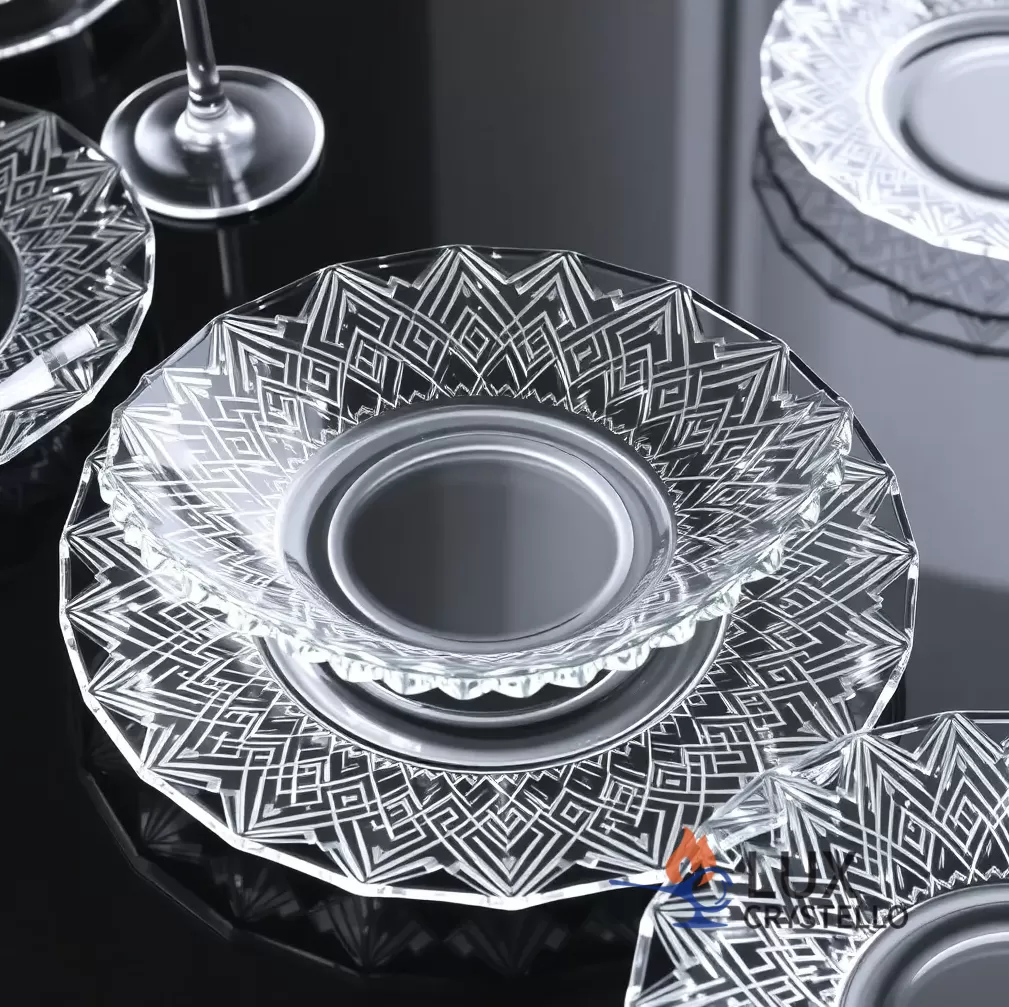
These comprehensive standards maintain essential equilibrium between aesthetic excellence and regulatory compliance. Within the European marketplace, compliance represents not an optional consideration but an absolute necessity for sustainable business operations and brand reputation preservation.
Source EU-Compliant Crystal Glassware with Confidence
Luxcrystello provides comprehensive custom OEM solutions fully compliant with European safety directives, encompassing material sourcing through batch verification. Contact our regulatory specialists to develop your distinctive crystal glass products adhering to all applicable EU regulations and quality standards.
Contact us to co-develop custom-blown glass lampshade collections tailored to your interior vision or retail catalog. Click Here