


Testing Glass Density for Hookah Vases: The Foundation of Quality Control
Core Keywords: testing glass density for hookah vases, hookah manufacturing standards, structural glass performance
FAQ:
Q: Why is glass density testing crucial for hookah vases?
A: Testing glass density for hookah vases ensures structural integrity, thermal resistance, and durability. Consistent density prevents failures under stress and transforms visual craftsmanship into reliable structural glass performance.
Q: What standards should professional hookah manufacturing follow?
A: Professional hookah manufacturing standards include rigorous density testing, precise cooling control, detailed production records, and consistent material quality to ensure every product meets durability requirements and maintains optimal structural glass performance.
Q: How does glass density affect the user experience?
A: Proper structural glass performance achieved through density testing results in hookah vases that withstand temperature changes, resist vibration, maintain clarity, and provide longer-lasting durability, enhancing the overall smoking experience.
In professional hookah manufacturing, testing glass density for hookah vases defines the balance between beauty and endurance. Glass density directly influences thermal resistance, clarity, and structural integrity. A vase may appear flawless yet still fail under real stress if density varies across its body. Consistent measurement transforms visual craftsmanship into predictable structural glass performance.

Testing Glass Density for Hookah Vases: Establishing a Consistent Method
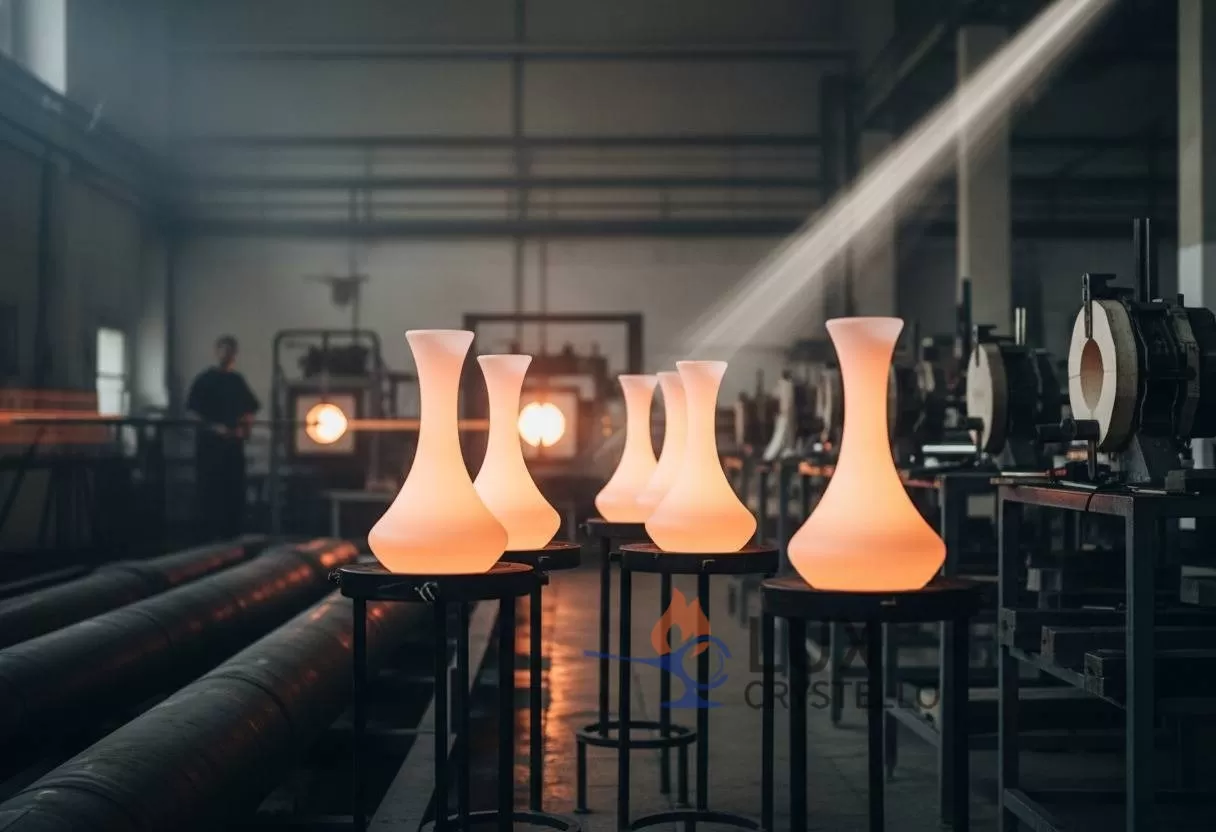
Modern brands use testing glass density for hookah vases as a technical checkpoint to detect variance before products reach consumers. Integrating this step helps enforce reliable hookah manufacturing standards, ensuring each base demonstrates measurable structural glass performance. Manufacturers that track density across batches can maintain tighter quality brackets while improving long-term stability.
Why Glass Density Matters in Hookah Design
Glass density aligns closely with heat response, vibration tolerance, and surface durability. Higher density typically correlates with a compact molecular pattern, offering improved heat resistance and reduced fracture risk. When testing glass density for hookah vases, specialists examine results to detect uneven melting or cooling cycles. These readings reveal furnace efficiency, cooling balance, and compliance with modern hookah manufacturing standards, all critical for stable structural glass performance across product lines.
Simple Testing Techniques You Can Standardize
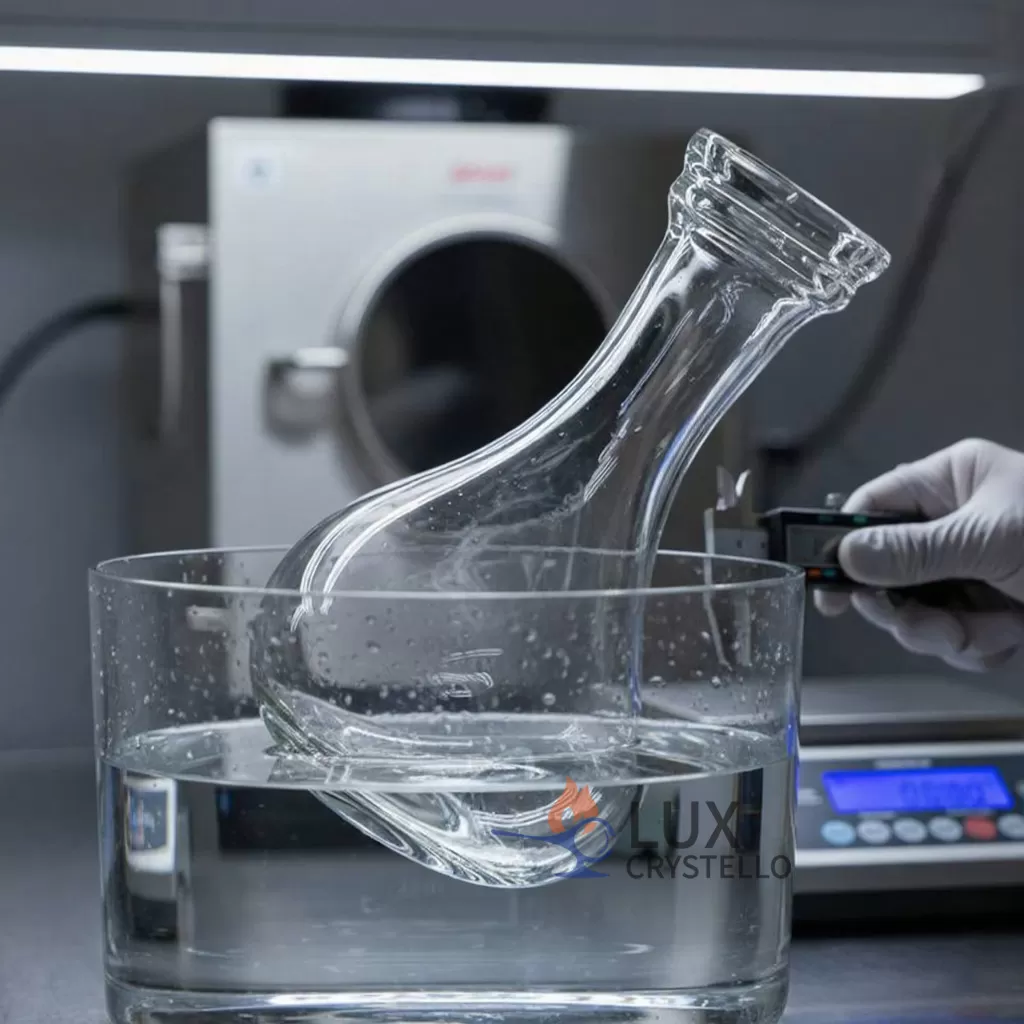
A practical method for testing glass density for hookah vases uses water displacement and digital weighing. By submerging a sealed vase in measured water and dividing its weight by displaced volume, density becomes quantifiable.
Repeating the test three times can reveal a variance above 0.03 g/cm³—an indicator of irregular wall thickness or internal bubbles. These flaws weaken high-stress zones, reducing structural glass performance. Documenting these findings supports compliance with essential hookah manufacturing standards.
Visual and Acoustic Quality Indicators
Density testing alone cannot expose every internal defect. After testing glass density for hookah vases, technicians inspect refractive bands under diffused light to spot uneven cooling. A resonance tap test follows; clear ringing indicates molecular consistency, while dull spots suggest tension pockets. These acoustic observations play an important role in assessing structural glass performance and validating hookah manufacturing standards during inspection workflows.
Integrating Data into Production Records
Factories that maintain detailed records of testing glass density for hookah vases create long-term traceability. Data, batch IDs, and imagery help identify which furnaces, molds, or cooling cycles deliver optimal outcomes. This archive strengthens adherence to trusted hookah manufacturing standards and supports predictable structural glass performance even during export logistics where vibration and temperature shifts challenge product durability.
Expert Commentary and Market Insights
Materials specialists highlight that density variance is closely linked to thermal stress failure rates. Retail analysts also report that hookah bases supported by density verification often produce fewer returns and receive higher durability ratings. These market patterns reinforce why standardized density evaluation remains an indicator of trusted structural glass performance and modern hookah manufacturing standards.
From Testing to Consumer Confidence
Systematic testing glass density for hookah vases enhances not only physical durability but also brand credibility. Consumers may not see the technical documentation, but they feel the results through stable heating behavior, balanced weight, and long-lasting clarity. Density testing turns artistic glassmaking into a measurable engineering discipline that elevates the reliability of every hookah base.
Conclusion
As craftsmanship merges with material science, testing glass density for hookah vases becomes an essential guarantee behind every well-made piece. Luxcrystello Crystal applies rigorous measurement systems, precise cooling control, and consistent hookah manufacturing standards to ensure lasting structural glass performance in each hookah base.
Luxcrystello Crystal: Where Precision Meets Craftsmanship
Brands seeking higher reliability and signature designs can benefit from Luxcrystello Crystal's production expertise—where density, durability, and visual refinement come together seamlessly.
Elevate your manufacturing standards with scientifically verified processes. Contact Luxcrystello Crystal today to discuss custom solutions that guarantee exceptional structural glass performance.