


Pricing Index of Hookah Components: Market Analysis and Cost Trends
Core Keywords: pricing index of hookah components, hookah market analysis, manufacturing cost trends
FAQ:
Q: What does the pricing index of hookah components measure?
A: The pricing index of hookah components tracks fluctuations in the costs of raw materials (like stainless steel and borosilicate glass), energy, production labor, and logistics associated with manufacturing key parts such as stems, bowls, bases, and accessories.
Q: How can businesses use hookah market analysis strategically?
A> Hookah market analysis helps businesses understand regional production advantages, monitor competitor pricing, anticipate supply-demand shifts, and make informed decisions about procurement timing, inventory management, and market entry strategies.
Q: What are the current manufacturing cost trends affecting the industry?
A> Key manufacturing cost trends include rising energy prices, increased adoption of automation to offset labor costs, a focus on material optimization and recycling, and the impact of global currency fluctuations on raw material sourcing.
As global demand for hookah equipment continues to rise, the pricing index of hookah components has become a key benchmark for manufacturers, distributors, and traders. Tracking this index provides transparency into production costs, supply chain stability, and regional pricing differentials—factors that shape global competitiveness in the modern hookah market analysis.
Understanding the Pricing Index of Hookah Components
The pricing index of hookah components measures fluctuations in raw material costs, energy expenses, and production labor associated with stems, bowls, bases, and accessories. It serves as a macroeconomic indicator for the hookah industry, reflecting global supply-demand balances.
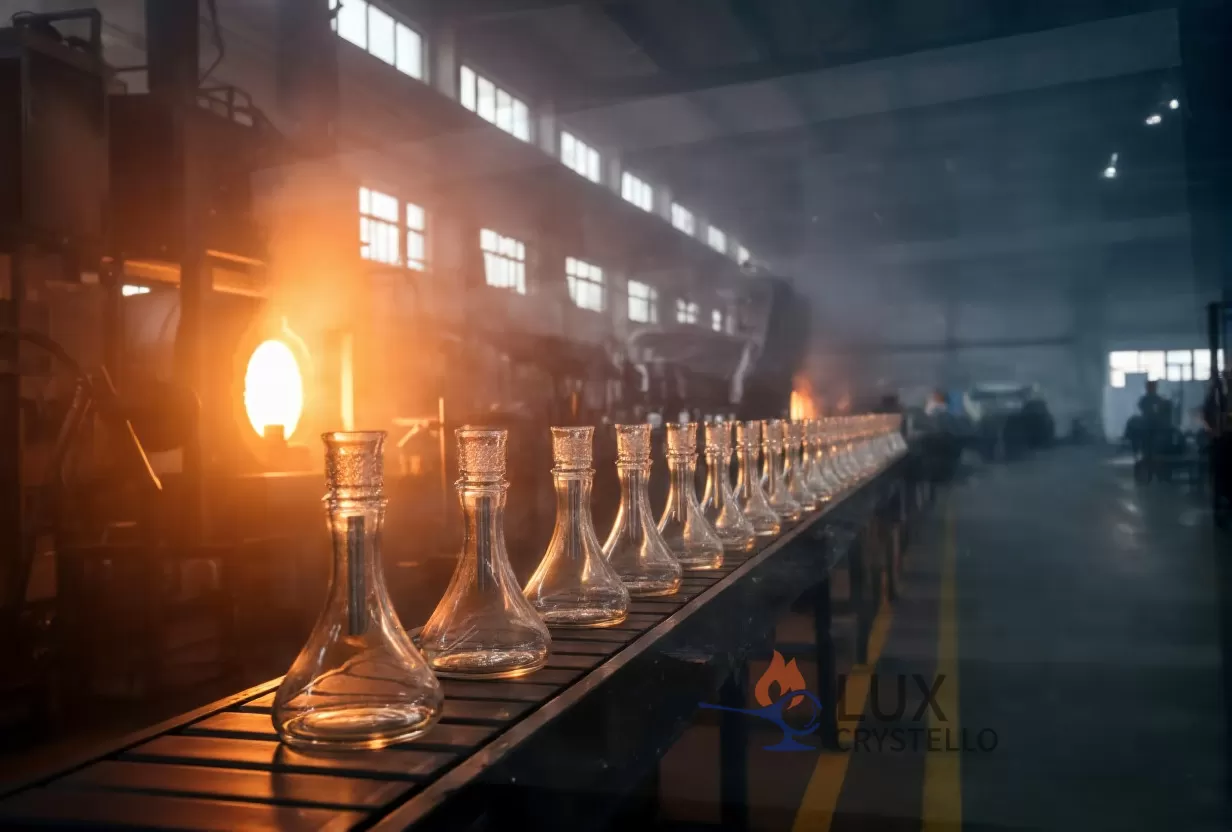
Industry data and manufacturer surveys indicate a moderate rise in the index over the past year, mainly due to higher energy prices and material sourcing challenges across Asia and Europe. However, stable glass production and improved automation are helping manufacturers reduce volatility and maintain predictable manufacturing cost trends.
Factors Influencing the Hookah Component Pricing Index
Several elements directly affect the pricing index of hookah components:
- Raw Material Costs: Fluctuations in stainless steel, aluminum, and borosilicate glass prices have a direct impact on wholesale pricing.
- Energy and Labor Rates: Glass and metal fabrication are energy-intensive processes. A 10% rise in energy costs can increase final product prices by 3–4%.
- Regional Regulations: Import tariffs and quality certifications vary by country, influencing local market rates.
- Design Complexity: Custom orders and artistic finishes add value but also increase unit cost.
Professionals in hookah market analysis monitor these inputs to forecast pricing changes and recommend procurement strategies that minimize financial risk.
Global Hookah Market Analysis and Price Movement
Based on current hookah market analysis, North Africa and the Middle East remain cost-efficient production zones due to skilled labor and localized material availability. In contrast, European producers maintain higher unit prices because of strict environmental standards and premium branding.
Asia—particularly China and India—has emerged as a strategic hub for cost-effective mass production, balancing quality and scalability. These dynamics directly shape the pricing index of hookah components, as regional competition influences global wholesale averages.
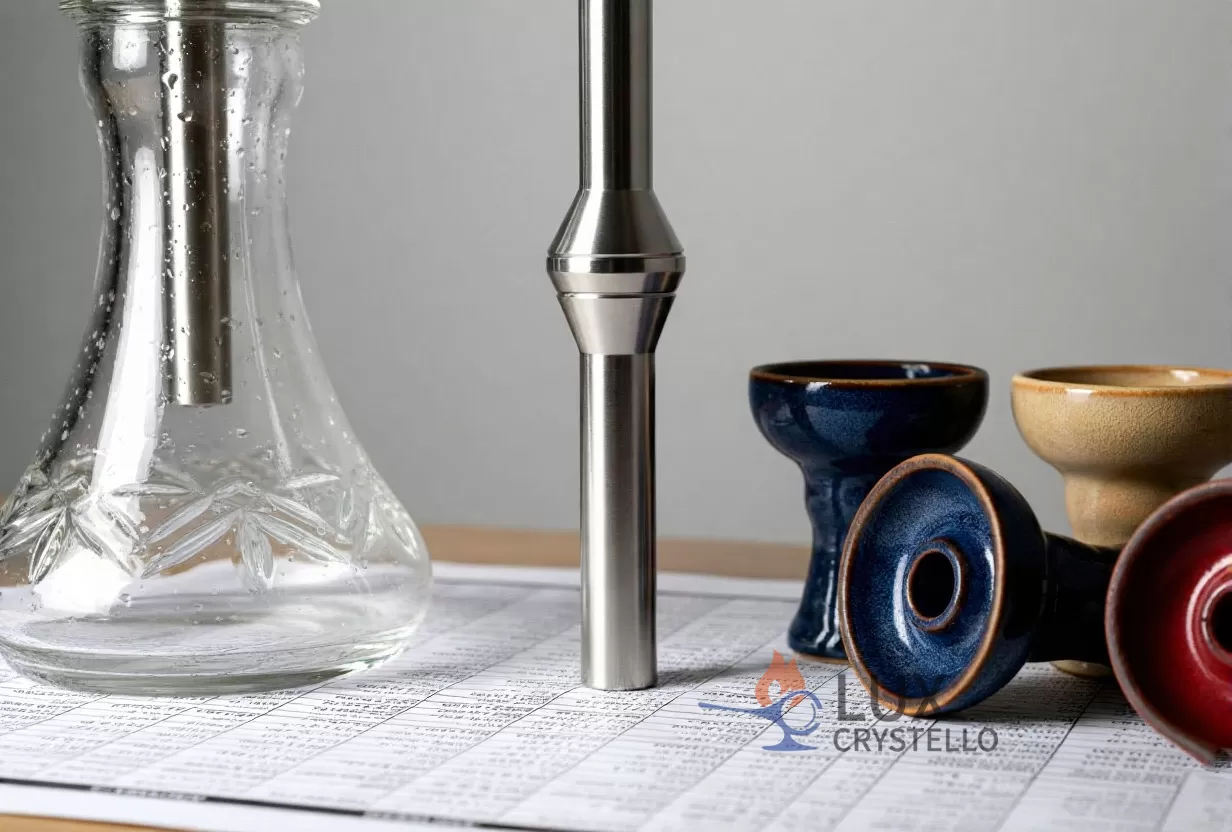
Recent manufacturing cost trends show that glass bases account for 35–40% of a hookah’s total production cost, followed by metal stems (25%) and accessories like hoses and diffusers (15%). Transparent glass bases, though slightly pricier, remain the preferred material for premium models due to their aesthetic and durability benefits.
Manufacturing Cost Trends and Supply Chain Adjustments
The current manufacturing cost trends reflect a shift toward automation and material optimization. Glass factories are increasingly adopting energy-efficient furnaces, recycling water systems, and digital mold calibration to reduce waste. These improvements not only stabilize the pricing index of hookah components but also enhance environmental sustainability.
Currency fluctuations also play a role—since raw materials like silica sand and aluminum are traded globally, exchange rate volatility can cause short-term price spikes. Manufacturers maintaining local sourcing partnerships, such as Luxcrystello Crystal, experience greater price stability compared to import-dependent suppliers.
How Brands Use Pricing Data Strategically
Businesses rely on the pricing index of hookah components to plan annual budgets, negotiate supplier contracts, and adjust retail margins. Wholesale buyers can use regional data to time bulk purchases when market conditions favor lower costs.
For example, during periods of low energy prices, manufacturers can ramp up production of glass hookah bases to build inventory at minimal cost. Integrating hookah market analysis with manufacturing cost trends helps companies align product pricing with both seasonal demand and long-term profitability goals.
Conclusion
The pricing index of hookah components is more than just a number—it's a vital performance indicator for the global supply chain. By studying hookah market analysis and tracking manufacturing cost trends, companies can anticipate price movements, optimize operations, and maintain competitiveness in a volatile international marketplace.
Luxcrystello Crystal: Your Partner for Stable Sourcing and Premium Craftsmanship
Looking for consistent pricing, transparent sourcing, and premium glass craftsmanship? Luxcrystello Crystal is your trusted partner in hookah components. With decades of experience, Luxcrystello Crystal ensures stable pricing, low MOQ solutions, and world-class quality for brands and distributors worldwide.
Gain insight-driven confidence in your sourcing strategy. Contact Luxcrystello Crystal today to discuss your next project and explore our premium components with stable, transparent pricing.