


Glass Hookah Airflow System: Balancing Temperature, Design, and Smoke Quality
Core keywords: glass hookah airflow system, hookah temperature control design
Explore how a glass hookah airflow system improves hookah temperature control design, flavor stability, and smoke quality through smart engineering and precision glasswork.
Why the Glass Hookah Airflow System Matters
In modern hookah engineering, the glass hookah airflow system has evolved from simple aesthetics into a functional performance core. The precision of air circulation defines how heat, vapor, and flavor interact. Traditional setups often rely on metal stems that create uneven airflow and unwanted temperature spikes. By shifting to all-glass designs, manufacturers can achieve smoother air distribution, cleaner taste, and lower thermal conductivity—enhancing both consistency and user comfort.
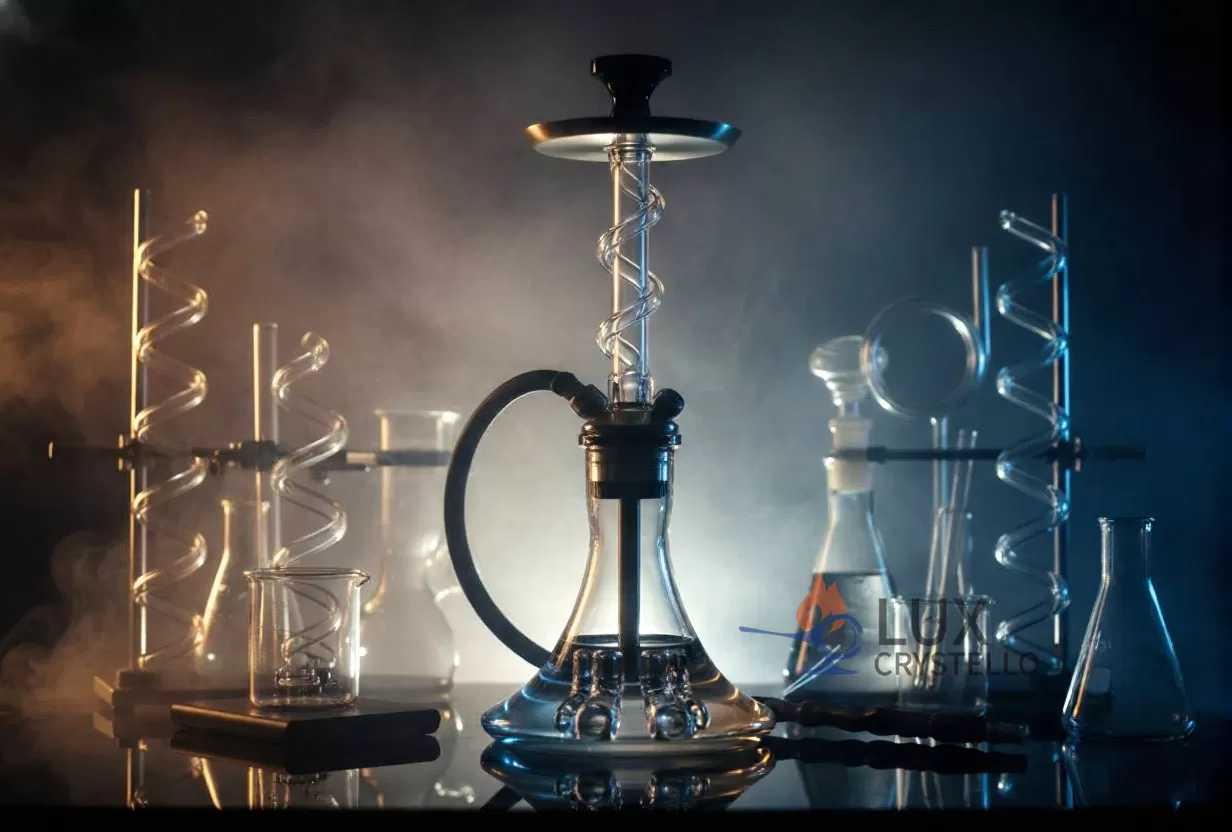
Engineering the Perfect Glass Hookah Airflow System for Temperature Control
The central challenge in every hookah temperature control design is maintaining thermal equilibrium between charcoal, bowl, and base water. Too much heat burns tobacco oils; too little weakens vapor density.
High-quality glass systems help stabilize this balance by evenly dissipating heat through the stem and diffuser. Some advanced models use double-walled glass chambers or integrated cooling loops that channel airflow through heat-resistant borosilicate tubing, creating a steady and controlled temperature curve. This innovation ensures that each puff remains smooth, flavorful, and thermally consistent.
Airflow Dynamics and Smoke Quality
The structure of the glass hookah airflow system defines the final hookah smoke quality. Smooth laminar flow inside the glass stem reduces turbulence, minimizing drag while improving draw comfort. Integrated diffusers break smoke into microbubbles, expanding the surface area and cooling the vapor before inhalation. The result is denser clouds with richer flavor retention and minimal harshness.
Precision airflow mapping—using CFD (computational fluid dynamics)—allows engineers to optimize angles and channel diameters for peak performance. These refinements directly translate to superior hookah smoke quality, consistent across sessions.
Material Science Behind Glass Hookah Performance
Borosilicate glass is the backbone of modern hookah systems due to its exceptional thermal and chemical resistance. Unlike metal or acrylic, glass does not impart metallic notes or absorb residues, ensuring a neutral, pure smoke pathway. Its low thermal expansion also supports a stable hookah temperature control design, preventing cracking under heat cycles and extending product life.
Additionally, transparent airflow paths highlight both cleanliness and functional clarity—an aesthetic feature that doubles as a performance indicator.
Design Meets Function
Next-generation hookahs use modular components that merge fluid mechanics with artistic form. Adjustable valves, vortex diffusers, and curved glass channels transform the glass hookah airflow system into a precision instrument for flavor control. This harmony between engineering and craftsmanship redefines hookah smoke quality—from sensory indulgence to measurable performance.
Safety and Sustainability
Lead-free borosilicate construction not only supports health standards but also aligns with global sustainability goals. Unlike alloy systems, all-glass airflow setups are fully recyclable and resistant to oxidation or corrosion. This ensures stable airflow and reliable performance over years of use—an essential feature for a premium hookah temperature control design.
This long-term durability reinforces the engineering value of a glass hookah airflow system built for both safety and sustainability.
Partner with a Manufacturer Who Masters Precision
Our team specializes in custom glass hookah airflow systems engineered for optimal balance, heat stability, and clean smoke output. Each model undergoes airflow calibration, heat mapping, and structural stress testing to ensure real-world reliability.
If your brand values craftsmanship backed by measurable performance, let’s collaborate. Together, we can create a new generation of glass hookahs that unite scientific precision, sustainable design, and world-class hookah smoke quality.
FAQ
What is a glass hookah airflow system?
A glass hookah airflow system refers to the design and arrangement of glass components (stem, diffuser, base) that manage the movement of air and smoke through the hookah. It aims to optimize draw smoothness, cooling efficiency, and flavor purity.
How does the airflow system affect hookah temperature control design?
The glass hookah airflow system directly influences hookah temperature control design by regulating how heat travels from the bowl to the water and smoke. Efficient airflow disperses heat evenly, preventing hot spots and maintaining a consistent, ideal temperature for vaporization.
Why is glass preferred for advanced airflow systems?
Glass is preferred because it is inert (doesn't affect flavor), has excellent thermal properties for heat management, allows visual monitoring of smoke and cleanliness, and can be precision-formed into complex shapes that optimize airflow and enhance hookah smoke quality.
Can the airflow system improve hookah smoke quality?
Yes, an optimized glass hookah airflow system significantly improves hookah smoke quality by ensuring smoother, cooler, and denser smoke. Features like diffusers create smaller bubbles for better cooling and filtration, resulting in a cleaner, more flavorful inhalation.
Elevate your product with engineered airflow precision. Contact Luxcrystello Crystal today to develop a custom glass hookah system.